When choosing an SEO agency, spotting red flags early can save you from wasted money, damaged rankings, and even long-term penalties. Here’s what to watch out for:
- Guaranteed Rankings: No one can promise top rankings due to ever-changing algorithms. Quick results often rely on risky tactics.
- Lack of Transparency: Agencies should explain their methods and provide clear reports. Beware of terms like "secret strategies."
- Black-Hat Techniques: Practices like paid links, keyword stuffing, or spammy backlinks can lead to penalties or removal from search results.
- Generic Packages: One-size-fits-all solutions fail to address your specific business goals or industry needs.
- Poor Communication: Unresponsive agencies or vague updates signal trouble. Look for clear roadmaps and regular progress reports.
- Account Control Issues: Ensure you retain ownership of all accounts, including Google Analytics and Search Console.
The Risks: A bad SEO partner can cost you visibility, revenue, and brand trust. Recovery from penalties or bad practices can take months or even years.
The Solution: Choose agencies with clear, ethical methods, proven results, and tailored strategies. Always research reviews, ask for case studies, and verify their processes before signing on.
Common SEO Agency Red Flags
Knowing what to watch for can help you avoid costly mistakes when hiring an SEO agency. Here are some key warning signs to keep in mind.
Guaranteed Rankings and Unrealistic Promises
Beware of agencies that promise top rankings or claim to have "insider knowledge" of Google’s algorithms. As Google Search Central explains:
"If they guarantee you that their changes will give you first place in search results, find someone else."
The reality is no one can guarantee specific rankings because search engines constantly update their algorithms. Jill Kocher Brown, Director of SEO at JumpFly, emphasizes this:
"No one in SEO has a Googler in their pocket pulling levers to improve a specific site’s performance. It does not exist."
SEO takes time – typically 4 to 12 months. Agencies promising instant results or dramatic traffic increases in just weeks often rely on risky shortcuts that could lead to penalties. Ethical practices and clear reporting are crucial to achieving sustainable success.
Lack of Transparency in Methods and Reporting
Another red flag is when agencies hide their methods or fail to provide clear reports. A trustworthy agency will explain its strategies and tie its work to your business goals. If an agency uses vague terms like "secret methods", they may be covering up unethical practices.
You should also have ownership and access to your Google Analytics and Search Console accounts. Agencies that insist on controlling your logins could leave you locked out of your data when the contract ends. Reports should focus on actionable insights – like leads, revenue, and conversions – rather than superficial metrics such as total keyword counts or rankings for irrelevant search terms. Before committing, ask for a sample client report to ensure their metrics align with what matters most to your business.
Reliance on Black-Hat or Outdated Techniques
Some agencies still use outdated or unethical methods that can jeopardize your site’s long-term success. Techniques like Private Blog Networks (PBNs), paid links, keyword stuffing, and automated spam violate search engine guidelines and can lead to severe penalties or even removal from search results.
A major warning sign is when an agency works without requesting access to essential tools like Google Analytics, Search Console, or your CMS. Legitimate SEO requires integration with these platforms. If they don’t need access, they might be relying on off-site tactics like link injections rather than improving your website directly.
Other harmful practices include doorway pages (fake pages created to rank and redirect users), which Google banned in 2015, and using overly optimized anchor text that exactly matches target keywords. Additionally, a sudden influx of low-quality backlinks from unrelated or foreign-language websites could indicate the use of link farms or PBNs. While these tactics may deliver short-term results, they often result in long-term damage to your site’s reputation and rankings.
One-Size-Fits-All Packages Without Customization
Generic SEO packages that don’t consider your industry, competitors, or business goals are another red flag. Agencies offering standardized checklists or cookie-cutter services often fail to address the unique challenges of your market.
For example, the SEO strategy for a local plumber will differ significantly from that of an e-commerce store or a B2B software company. A one-size-fits-all approach simply won’t work.
Be cautious of agencies that lead with free, automated audits. These reports often exaggerate minor issues like missing alt tags or short meta descriptions to pressure you into signing a contract. A reliable agency will take the time to conduct a custom analysis of your website, competitors, and market before proposing a tailored strategy.
Poor Communication and Unresponsive Support
Strong communication is a cornerstone of any successful SEO partnership. If an agency is slow to respond, provides vague answers, or fails to offer regular updates, consider it a red flag.
A reliable agency should give you a clear three-month roadmap outlining their planned work. Even if ranking improvements take time, you should see tangible efforts – such as technical audits, link analyses, or content optimizations – within the first 60 days. If they can’t clearly show what they’ve accomplished, it’s a sign that little effective work is being done.
Look for an agency with responsive account managers who keep you informed and engaged throughout the process. Consistent communication ensures you stay in the loop and can measure progress effectively.
sbb-itb-7a53647
The Risks of Choosing the Wrong SEO Partner
Picking the wrong SEO agency can cost you a lot more than just the monthly fee. Poor practices often take months to detect and even longer to fix. If an agency uses black-hat techniques, you could face steep recovery costs – like removing toxic backlinks, dealing with penalties, and repairing your site’s reputation. These expenses can easily surpass your initial investment. And that’s just the beginning of the potential fallout.
One of the most serious risks is losing your organic search visibility. Penalties from search engines can result in your site being de-indexed or even blacklisted, effectively cutting off your revenue stream. Recent search engine updates have cracked down hard on manipulative tactics, imposing penalties that aren’t just inconvenient – they can threaten the survival of your business. Reversing such damage can take months, even years.
Your brand’s reputation also hangs in the balance. Practices like creating doorway pages – which redirect users to irrelevant content – can alienate potential customers. If your site becomes associated with spammy backlinks or shady tactics, trust in your brand takes a hit. And once users start questioning your credibility, it’s an uphill battle to regain their confidence.
Another major risk is losing control over your digital assets. Some agencies might take ownership of critical accounts like your Google Business Profile, domain, or analytics. If the partnership ends poorly, you could find yourself locked out, forced to rebuild your online presence from scratch. Neil Patel puts it bluntly:
Your online business will succeed or fail based on SEO. It’s too important to hand over to just anyone, and you can’t afford to ignore black hat SEO that could tank your company.
On top of all this, hidden costs can eat away at your ROI. Ineffective SEO doesn’t just come with recovery expenses – it also diverts your resources. Your team may end up spending valuable time managing a failing SEO relationship instead of focusing on growth. Meanwhile, the opportunity cost of what a skilled partner could have achieved during that time adds to the setback. With the global SEO market valued at over $90 billion, there’s no shortage of agencies vying for your business. But a poor choice could set your company back not just months – but years.
How to Choose a Trustworthy SEO Agency
Focus on Transparent and Results-Driven Strategies
A reliable SEO agency should clearly outline its methods and give you full access to the platforms that matter most. You should always have direct control over your data and accounts. As Patrick Reinhart, VP of Digital Strategies at Conductor, wisely notes:
"The beginning of any professional relationship should be built on trust, but it’s a two-way street."
Choose an agency that sticks to ethical, white-hat SEO practices. This includes creating high-quality content, optimizing technical aspects like site speed and structured data, and earning genuine editorial links instead of purchasing them. They should prioritize metrics that genuinely affect your business – like leads, conversions, and revenue – over superficial vanity metrics. To ensure accountability, ask for a three-month plan outlining their strategies from the start.
This level of transparency sets the stage for measuring real, impactful results, which we’ll dive into next.
Look for Proven Experience and Verifiable Results
Transparency is key, but experience and tangible results are just as important. Before hiring, check third-party reviews on platforms like Clutch, Trustpilot, or Google Business Profile – 74% of business owners take this step. Also, ask for case studies that provide clear before-and-after data, showcasing improvements in traffic, leads, and revenue over a 6–12 month period. Avoid agencies that rely on vague claims like "better visibility."
Request references from previous clients, ideally businesses in a similar industry or of a comparable size. Make sure their success stories are recent – within the last year or two – since older SEO strategies may no longer deliver results. Additionally, confirm that the agency has skilled in-house experts rather than outsourcing to unnamed third parties.
Evaluate Communication and Customization
In addition to transparency and proven results, effective communication and a personalized approach are critical. The agency should develop a tailored strategy based on in-depth manual audits and thorough research. They should take the time to understand your audience, revenue streams, and objectives.
Good communication is just as important as a solid strategy. Look for agencies that provide regular, detailed updates – monthly reports and quarterly strategy meetings are common practices. These updates should clearly explain both achievements and areas needing improvement. Jill Kocher Brown, Director of SEO at JumpFly, highlights this point:
"No decisions without data! That’s the key to improving SEO performance and accountability."
Ensure the agency gives you access to real-time data through dashboards or direct logins, so you can independently monitor progress. Keep in mind that SEO is a long-term game. While you may see some improvements within 3 to 6 months, significant results often take 7 to 12 months to materialize. Be cautious of agencies that promise quick fixes or guaranteed rankings – they’re often too good to be true.
Red Flags vs. Trustworthy Practices: Comparison Table
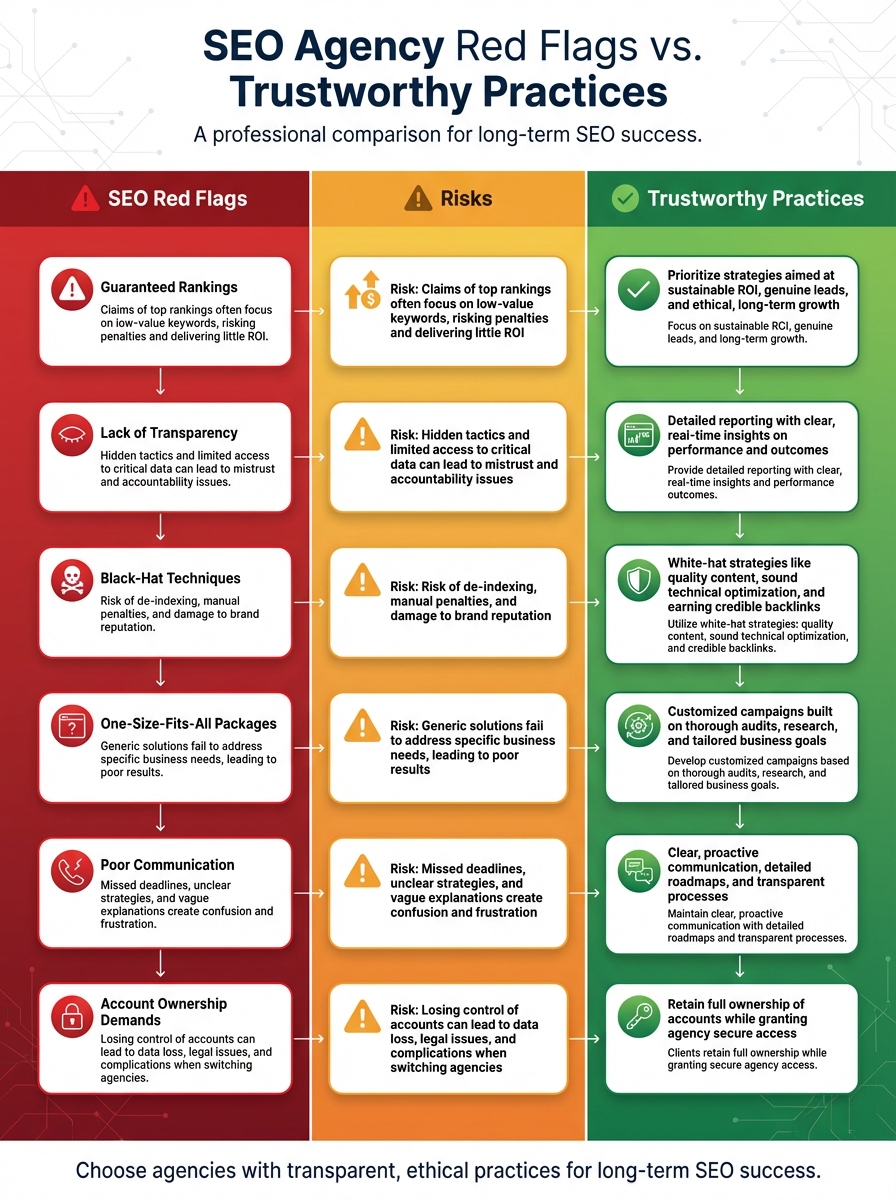
SEO Agency Red Flags vs Trustworthy Practices Comparison
Comparison Table
Here’s a quick side-by-side comparison to help you differentiate between questionable practices and reliable approaches when evaluating SEO agencies.
| Red Flag Practice | Risks | Trustworthy Alternative |
|---|---|---|
| Guaranteed Rankings | Claims of top rankings often focus on low-value keywords, risking penalties and delivering little ROI. | Prioritize strategies aimed at sustainable ROI, genuine leads, and ethical, long-term growth. |
| Lack of Transparency | Hidden tactics and limited access to critical data can lead to mistrust and accountability issues. | Opt for agencies offering detailed reporting with clear, real-time insights on performance and outcomes. |
| Black-Hat Techniques | Risk of de-indexing, manual penalties, and damage to your brand’s reputation. | Stick to white-hat strategies like quality content, sound technical optimization, and earning credible backlinks. |
| One-Size-Fits-All Packages | Generic solutions fail to address your specific business needs, leading to poor results. | Choose customized campaigns built on thorough SEO audits, research, and tailored business goals. |
| Poor Communication | Missed deadlines, unclear strategies, and vague explanations create confusion and frustration. | Work with partners who provide clear, proactive communication, detailed roadmaps, and transparent processes. |
| Account Ownership Demands | Losing control of your accounts can lead to data loss, legal issues, and complications when switching agencies. | Ensure you retain full ownership of your accounts while granting the agency secure access. |
This table can serve as a handy guide to spot red flags and identify trustworthy practices when selecting an SEO agency.
Conclusion
Choosing the right SEO partner can make or break your online growth. The SEO industry is packed with agencies promising quick fixes, but these often lead to wasted budgets, missed opportunities, and even long-term penalties. As Google cautions, businesses should "beware of SEOs that claim to guarantee rankings, allege a ‘special relationship’ with Google, or advertise a ‘priority submit’ to Google".
The agencies worth your trust prioritize transparency, ethical white-hat strategies, and business-driven results – not shallow metrics like rankings or impressions. These practices directly address the common pitfalls, such as unrealistic guarantees or poor communication. Reputable agencies understand that authentic SEO requires time, often three to six months for initial progress and up to a year for meaningful outcomes. Christine Darby, Founder of Collaborada, sums it up perfectly:
SEO is more than just achieving high rankings. It’s about establishing trust, providing value to your visitors, and building a sustainable online presence.
Before signing on the dotted line, take the time to verify reviews, request detailed reports focused on tangible outcomes, and ensure you maintain full control of your accounts. With so many business owners already conducting thorough research, doing your homework is a step you can’t afford to skip.
FAQs
What are the warning signs that an SEO agency may be using unethical practices?
Spotting an SEO agency that relies on shady or "black-hat" tactics is essential to safeguarding your website’s reputation and search rankings. Watch out for warning signs like these:
- Promises of guaranteed rankings or lightning-fast results: SEO takes time, and anyone offering immediate success is likely cutting corners.
- Requests for full control of your data or logins: This could jeopardize your ownership and leave you vulnerable.
- Use of risky methods: Tactics like link farming, keyword stuffing, or cloaking can trigger penalties or even get your site blacklisted by search engines.
Choose agencies that prioritize openness and ethical practices to ensure your business sees steady, long-term growth.
What communication practices should I expect from a reliable SEO agency?
When selecting an SEO agency, prioritize those that value clear and open communication. A dependable agency will keep you in the loop with regular updates and detailed reports, breaking down their strategies in plain, straightforward language. They should be ready to answer your questions directly, without hiding behind complicated jargon or vague explanations.
Look for an agency that sets realistic expectations about what they can achieve and how long it will take. SEO is a gradual process, so be wary of anyone offering quick fixes or guaranteed top rankings – these promises often signal shady practices. Agencies that provide honest updates and align their efforts with your business goals are the ones you can trust.
Why is it essential to have control over your SEO accounts?
Maintaining control of your SEO accounts is crucial for ensuring transparency, safeguarding your data, and keeping your options open. When you retain ownership, you can access your data whenever you need, verify it’s being handled responsibly, and avoid unnecessary headaches if you ever decide to switch SEO agencies.
Be wary of agencies that demand full control or ownership of your accounts. This can make it difficult to regain access or manage your campaigns independently down the line. By keeping ownership, you stay in charge of your business’s digital assets.