Unlocking Success With Marketing Funnels
Marketing funnels are essential tools that systematically guide potential customers through their buying journey, from first discovering your brand to becoming loyal advocates. This proven framework, which dates back to E. St. Elmo Lewis’s AIDA model (Awareness, Interest, Desire, Action), remains highly relevant for modern businesses looking to grow their customer base.
A well-designed marketing funnel maps out exactly how to reach your audience with the right messages at each stage. It combines key marketing elements like content, social media, email, and ads into a cohesive system that efficiently converts prospects into customers. When done right, marketing funnels create predictable paths to revenue growth and long-term customer relationships.
The key to building an effective funnel is deeply understanding your target audience – their needs, challenges, and decision-making process. Successful funnels deliver relevant, valuable content that addresses customer pain points at each step. In this guide, we’ll explore the core principles behind high-converting marketing funnels and share 8 proven examples you can adapt for your business to boost visibility, increase sales, and foster customer loyalty.
1. Traditional AIDA Funnel
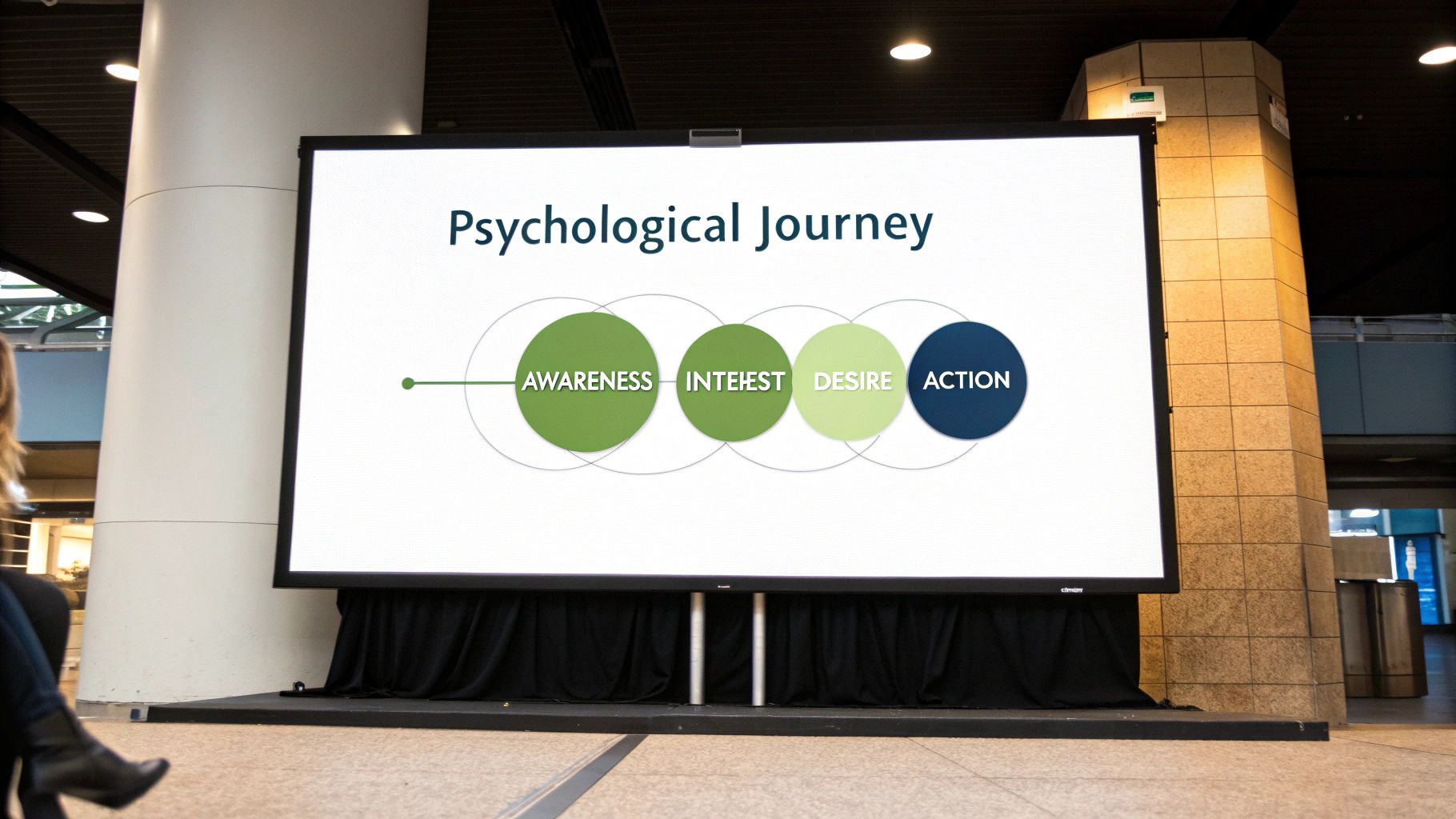
The AIDA model outlines the four key stages that customers move through: Awareness, Interest, Desire, and Action. As one of the most established marketing frameworks, it helps businesses understand how customers progress from first discovering a brand to making a purchase. The model’s focus on customer psychology makes it highly practical for developing targeted marketing strategies.
Features:
- Four distinct stages: Awareness, Interest, Desire, and Action.
- Linear progression: Customers move step-by-step through each stage.
- Focus on psychology: Maps the customer’s changing mindset and motivations.
- Clear conversion goals: Each stage has specific objectives driving toward purchase.
Pros:
- Simple to understand: The clear structure works well for businesses of any size.
- Ideal for simple products: Particularly effective with straightforward sales cycles.
- Measurable progress: Each stage has trackable metrics.
- Time-tested method: Decades of successful use across industries.
Cons:
- Too basic for modern buyers: Today’s customer journey involves multiple touchpoints and channels.
- Misses cross-channel interactions: Struggles to capture complex marketing campaigns.
- Lacks retention focus: Primarily targets new customer acquisition.
Examples:
- Coca-Cola brand campaigns: Uses widespread advertising to maintain high brand recognition.
- Apple product launches: Builds anticipation through pre-launch teasers and reveals, converting interest into sales.
- Nike marketing: Uses inspiring stories and emotional messaging to create product desire.
Tips for Implementation:
- Create targeted content: Match your message to customer’s mindset at each stage.
- Track drop-off points: Find and fix areas where customers leave the funnel.
- Choose right channels: Use social for awareness, email for interest, and ads for action.
- Keep experience smooth: Ensure easy movement between funnel stages.
Historical Context:
E. St. Elmo Lewis developed the AIDA model in 1898. Since then, it has remained a core marketing concept, helping countless businesses map customer behavior and create effective strategies.
2. Content Marketing Funnel
The Content Marketing Funnel helps businesses connect with customers by sharing helpful, educational content at each stage of their journey. This proven approach focuses on building relationships through valuable information rather than aggressive sales tactics.

How it Works:
The funnel maps content to key stages in the customer journey:
- Top of Funnel (Awareness): Attract new audiences with blog posts, videos, and social media content that introduces your brand
- Middle of Funnel (Consideration): Educate interested prospects using whitepapers, webinars, and case studies that showcase solutions
- Bottom of Funnel (Decision): Help ready-to-buy customers convert through product demos, trials, and consultations
- Post-Purchase (Retention): Keep customers engaged with exclusive resources, support content, and community involvement
Key Benefits:
- Build Trust: Position your brand as an expert by sharing valuable knowledge
- Create Lasting Impact: Content continues attracting leads long after publication
- Boost Search Rankings: Quality content improves SEO and organic traffic
- Reach More People: Repurpose content across multiple channels and formats
What Works Well:
- Clear focus on solving customer problems
- Content matched to each buying stage
- Consistent publishing schedule
- Strong calls-to-action
What to Watch Out For:
- Requires ongoing content creation
- Takes time to see results
- ROI can be challenging to measure
- Need to maintain content quality
Real Examples:
- HubSpot provides comprehensive resources for every stage
- Moz offers in-depth SEO education and tools
- Buffer shares practical social media marketing tips
Implementation Tips:
- Map content topics to customer needs at each stage
- Turn one piece of content into multiple formats
- Focus on being genuinely helpful
- Guide readers to clear next steps
- Measure and refine based on data
Why It Matters:
The Content Marketing Funnel gives businesses a proven framework for attracting and converting customers through valuable content. Its focus on education over promotion builds trust and authority while improving search visibility. For companies looking to grow sustainably online, this approach delivers results through helpful, purpose-driven content.
The key is consistency – regularly publishing quality content that addresses real customer needs at each stage of their journey. When done well, it creates a steady flow of engaged prospects while establishing your brand as a trusted resource.
3. Product-Led Growth Funnel
The Product-Led Growth (PLG) funnel approaches customer acquisition differently, making the product itself drive growth rather than traditional sales tactics. By letting users experience value firsthand through free trials or freemium models, companies can achieve natural adoption and expansion.
How it Works
PLG focuses on self-service – users can easily sign up, test core features, and upgrade plans when ready. The model rewards increased usage by unlocking more capabilities over time. Built-in sharing and referral features help spread adoption organically through existing users.
Features:
- Product as main converter: The product’s value itself drives user upgrades
- Self-service model: Users can explore independently
- Usage-based access: More features unlock with deeper engagement
- Viral growth loops: Natural sharing and referrals between users
Pros:
- Lower acquisition costs: Natural adoption reduces marketing spend
- Authentic user adoption: Direct product experience drives conversions
- Data-informed decisions: User behavior guides improvements
- Easy to scale: Organic growth enables rapid expansion
Cons:
- Product must be excellent: Poor experiences prevent adoption
- Not for all products: Complex offerings may need sales support
- Takes careful planning: Requires thoughtful onboarding design
- Clear value needed: Users must quickly see benefits
Examples:
- Slack’s free tier: Core chat features available free, upgrades add capabilities
- Dropbox’s referrals: Users earn space by inviting others
- Zoom’s free version: Limited free meetings drive paid upgrades
Implementation Tips:
- Track activation metrics: Identify and optimize key engagement points
- Design smooth onboarding: Guide users to core value quickly
- Highlight key features: Promote capabilities that drive conversions
- Add sharing options: Make it easy for users to invite others
The Growth Movement
PLG has gained momentum as users expect to try before buying, especially in SaaS. Companies like OpenView Partners have helped establish it as an effective approach. The model succeeds by focusing on product quality and user experience rather than aggressive sales tactics. Its proven ability to drive sustainable growth earns it a spot among top business strategies.
4. Account-Based Marketing (ABM) Funnel
Account-Based Marketing (ABM) focuses your marketing efforts on specific high-value accounts instead of broad audience segments. This targeted approach treats each account as its own market, making it especially powerful for B2B companies working on large, complex deals.
How ABM Works
The process starts with identifying key accounts that offer the highest potential value. This requires thorough research to build detailed profiles of each account, understanding their needs, challenges, and internal decision-making. Marketing and sales teams then work together to create personalized campaigns that reach decision-makers through multiple channels.
Key Features of ABM
- Custom Content Creation: Every piece of content speaks directly to the specific needs of each target account
- Coordinated Multi-Channel Outreach: Consistent messaging across email, social media, direct mail, and events
- Account-Level Metrics: Success measured by engagement, pipeline growth, and closed deals
- Sales-Marketing Partnership: Close teamwork ensures effective targeting and personalized communication
Advantages and Challenges
Benefits:
- Better Conversion: Personalized approaches lead to more qualified opportunities
- Strong B2B Results: Focused efforts deliver measurable returns
- Smart Resource Use: Resources go to the most promising accounts
- Deeper Relationships: Personal attention builds lasting partnerships
Challenges:
- Heavy Lift: Needs significant time for research and planning
- Hard to Scale: Difficult to expand across many accounts
- Research Demands: Success depends on thorough account knowledge
- Upfront Investment: Custom campaigns cost more initially
Real Examples in Action
- Salesforce uses ABM to connect with enterprise clients through tailored solutions
- IBM builds deep relationships using dedicated account teams
- ServiceNow targets specific industries with relevant solution messaging
Implementation Tips
- Choose Targets Wisely: Focus on accounts with the best fit and highest value
- Build Rich Profiles: Know each account’s needs, challenges and key players
- Unite Sales and Marketing: Ensure teams work together toward shared goals
- Personalize Everything: Create content that speaks to each account’s specific interests
Growth and Adoption
ABM has grown from a specialized tactic to a core B2B strategy, powered by new marketing technology and increased demand for personalized engagement. Industry leaders like Demandbase and Terminus have helped establish ABM best practices and provided tools for implementation.
Companies looking to stand out in competitive markets often find ABM delivers strong results when executed thoughtfully.
5. Social Media Marketing Funnel
The Social Media Marketing Funnel helps businesses reach and engage customers through social media platforms. It maps out the customer journey from first discovering your brand to becoming a paying customer. This approach creates meaningful connections with your target audience using platform-specific content and features.
Building genuine relationships is key to this strategy. Instead of just broadcasting messages, successful social media marketing focuses on meaningful interactions and community building. Live streams, Q&A sessions, and interactive polls let businesses connect with their audience in real-time. The most effective campaigns often use multiple social platforms to maximize their reach.
Examples of Successful Social Media Marketing Funnels:
- Gymshark: This fitness apparel brand works with fitness influencers to build brand awareness and community. Their influencer partnerships help them connect authentically with their target market.
- Dollar Shave Club: Their viral video campaign blended humor with a clear value proposition, leading to massive brand awareness and website traffic.
- Glossier: This beauty brand excels at community engagement by actively talking with followers, gathering feedback, and sharing customer content.
Pros:
- Direct Customer Communication: Talk directly with your audience and build personal connections
- Quick Feedback: Get immediate input on products and campaigns to make fast improvements
- Budget-Friendly: Reach large audiences at lower costs than traditional advertising
- Brand Community: Build loyal followers through consistent engagement and valuable content
Cons:
- Platform Changes: Social media algorithms and rules frequently change, affecting reach
- Regular Updates Needed: Must adapt strategies as platforms evolve
- Content Demands: Creating fresh content consistently requires significant time and effort
- ROI Tracking: Can be difficult to measure direct business impact
Tips for Implementation:
- Customize for Each Platform: Create content that fits each platform’s unique style and audience
- Stay Active: Reply to comments, answer questions, and join relevant conversations
- Track Results: Monitor engagement, reach, and conversions to improve performance
- Share User Content: Encourage customers to create and share content about your brand
Background and Growth:
Experts like Gary Vaynerchuk and platforms like Social Media Examiner and Buffer helped popularize strategic social media marketing. They emphasize authentic engagement and providing real value to audiences. Better platform advertising tools and analytics have made this approach standard for modern marketing.
The Social Media Marketing Funnel matters because it offers a clear framework for social media success. When you understand your customer’s journey and create the right content for each stage, you can effectively build awareness and drive sales. This approach helps businesses stand out and connect meaningfully with their target customers.
6. Webinar Funnel
The webinar funnel is a highly effective way to generate and convert leads, especially for B2B companies and educational businesses. It uses interactive webinar presentations to bring in prospects, share valuable knowledge, and guide them toward becoming customers.
How it Works: The core of this funnel is an educational webinar that teaches valuable content related to your product or service. The content serves to attract potential customers actively looking for solutions. Here’s how the funnel flows:
- Attraction: Promote your webinar through social media, email, and ads
- Registration: Get contact details by having people sign up for the webinar
- Attendance: Present the webinar and build connections with attendees
- Conversion: Make a compelling offer during or after the webinar
- Follow-up: Stay in touch with leads through emails and additional content
Key Features:
- Education-First: Appeals to people actively seeking to learn, positioning you as an expert
- Real-Time Interaction: Allows for live Q&A and direct engagement with potential customers
- Lead Collection: Gets valuable contact information through the registration process
- Automated Follow-up: Continues nurturing leads after the webinar ends
Pros:
- High Attention: Webinars keep people engaged longer than other content types
- Quality Leads: Attracts people already interested in your topic
- Expert Status: Shows your brand’s expertise in your field
- Reusable: Can present the same webinar multiple times to maximize reach
Cons:
- Tech Needs: Requires a good webinar platform and internet connection
- Time Investment: Takes significant effort to create quality content
- Attendance Rates: Not everyone who registers will show up live
- Speaker Skills: Success depends on having an engaging presenter
Real-World Examples:
Companies like Digital Marketer and Salesforce use webinars effectively in their marketing. Digital Marketer runs training webinars to generate leads, while Salesforce shows their software through demo webinars. ClickFunnels provides a “perfect webinar script” template that many marketers follow.
Tips for Success:
- Simple Registration: Make it quick and easy to sign up
- Send Reminders: Email registrants before the webinar to boost attendance
- Stay Interactive: Use polls and Q&A to keep attendees engaged
- Clear Next Steps: Tell attendees exactly what action to take after the webinar
When done right, webinar funnels can help you connect with your target audience, bring in qualified leads, and establish your credibility. Focus on delivering real value and guiding attendees toward the next step in your sales process.
7. Video Marketing Funnel
A Video Marketing Funnel uses videos strategically at every stage of the customer journey, from discovery to purchase. Different video formats serve specific purposes – whether building awareness, educating prospects, or closing sales. When done well, video funnels can achieve exceptional engagement and conversion rates.
Understanding the Flow:
The Video Marketing Funnel follows this essential structure:
- Awareness: Short, engaging videos on TikTok, Instagram Reels, and YouTube Shorts grab attention and introduce your brand
- Consideration: Explainer videos, demos, and testimonials on platforms like YouTube provide detailed information and showcase value
- Decision: Case studies and customer stories build trust and address concerns
- Action: Direct video messages in emails or on product pages drive purchases and signups
Features and Benefits:
- Multiple Video Types: From quick social clips to in-depth webinars, each format serves a different purpose
- Platform-Specific Content: Videos are customized for each platform’s unique style and requirements
- Story Progression: Videos build on each other to nurture viewers through the funnel
- Interactive Elements: Polls, quizzes, and clickable features boost engagement
Pros:
- High Engagement: Videos naturally capture and hold attention better than text
- Better Learning: Visual and audio elements help viewers retain information
- Strong Connections: Video creates personal bonds and builds trust
- Shows Complex Products: Video can demonstrate features more clearly than text or images
Cons:
- Production Costs: Quality video creation requires investment in equipment and expertise
- Technical Skills: Video editing and optimization need specialized knowledge
- Time Investment: Video production takes significant time and planning
- Platform Rules: Each site has specific requirements for video format and length
Real-World Examples:
- Blendtec’s “Will It Blend?” Uses humor to show product power while building massive brand awareness
- Dollar Shave Club: Created funny, relatable videos that disrupted an entire industry
- HubSpot: Produces educational content, demos, and customer stories to attract and convert leads
Tips for Implementation:
- Know Your Platform: Follow best practices for each social media site
- Keep It Brief: Focus on quick, valuable content that respects viewer time
- Clear Next Steps: Include direct calls-to-action in every video
- Track Results: Monitor views, engagement, and conversions to improve over time
Key Influencers: Video marketing success has been proven by creators like Gary Vaynerchuk, Casey Neistat, and companies like Vidyard who demonstrate its power to grow businesses.
8. E-commerce Marketing Funnel
The E-commerce Marketing Funnel maps out how online shoppers move from first discovering products to becoming loyal customers. With the growth of online retail, this framework has become essential for businesses selling products online.
Unlike traditional sales funnels, this model addresses specific aspects of online shopping behavior and digital customer journeys. It provides a clear roadmap for converting browsers into buyers in the digital space.
Key Components of an E-commerce Marketing Funnel:
- Product Presentation: High-quality images, detailed descriptions, and customer reviews that help shoppers make informed decisions
- Smooth Checkout: Simple payment process with clear pricing, secure gateways, and guest checkout options
- Cart Recovery: Follow-up with shoppers who add items but don’t purchase through emails and targeted ads
- Customer Retention: Building loyalty post-purchase through personalized recommendations and rewards programs
Benefits:
- Sales Focus: Direct emphasis on driving purchases and revenue
- Clear Analytics: Detailed tracking of marketing performance and ROI
- Marketing Automation: Key processes like emails and abandoned cart recovery can be automated
- Defined Path: Step-by-step approach to guide customers toward purchasing
Challenges:
- Market Saturation: High number of competing online stores
- Cart Abandonment: Many shoppers leave items in cart without buying
- Ongoing Updates: Regular optimization needed as shopping habits change
- Tech Skills: Platform setup and management requires technical knowledge
Real-World Examples:
- Amazon’s Recommendations: Using customer data to suggest relevant products and boost sales
- Shopify’s Marketing Tools: Built-in features for email campaigns and social media promotion
- ASOS Mobile Experience: Seamless shopping journey optimized for smartphone users
Implementation Tips:
- Optimize Product Pages: Create appealing, informative pages that rank well in search
- Use Retargeting: Show ads to past website visitors based on their interests
- Add Social Proof: Display reviews and testimonials to build credibility
- Simple Checkout: Remove friction points that could stop purchases
Growth and Development:
Shopify, BigCommerce, and WooCommerce have made e-commerce funnels accessible to businesses of all sizes. These platforms offer user-friendly tools for building online stores. Better analytics have also helped companies understand customer behavior and improve their funnels.
When properly implemented, an e-commerce marketing funnel helps businesses boost online sales and create lasting customer relationships. This structured approach leads to better marketing, improved user experience, and higher revenue.
8-Point Marketing Funnel Comparison
| Strategy | Implementation Complexity (🔄) | Resource Requirements (💡) | Expected Outcomes (📊) | Ideal Use Cases | Key Advantages (⭐) |
|---|---|---|---|---|---|
| Traditional AIDA Funnel | Low – Straightforward linear process | Low – Minimal setup and content | Clear, measurable conversion metrics | B2C campaigns and straightforward product launches | Easy to implement; proven model with clear stage goals |
| Content Marketing Funnel | Medium – Multi-stage planning required | High – Continuous content creation | Long-term engagement and SEO benefits | Brand building and education-driven marketing | Builds trust and sustained customer engagement |
| Product-Led Growth Funnel | High – Requires deep product integration | Medium – Needs product development focus | Scalable growth with lower acquisition costs | SaaS products and freemium models | Natural product adoption; data-driven optimizations |
| Account-Based Marketing (ABM) Funnel | High – Demands personalized, multi-channel coordination | High – Extensive research and customization | High conversion rates for targeted accounts | Enterprise-level B2B campaigns | Precision targeting; efficient use of resources |
| Social Media Marketing Funnel | Medium – Dynamic and platform-dependent | Medium – Ongoing content and engagement efforts | Rapid engagement and enhanced brand visibility | Real-time brand building and community engagement | Direct customer interaction; cost-effective reach |
| Webinar Funnel | High – Technical setup plus detailed preparation | Medium – Quality content production required | High engagement and generation of qualified leads | B2B education and lead nurturing campaigns | Authority building; high conversion quality |
| Video Marketing Funnel | High – Requires professional production and strategy | High – Investment in video production | Improved retention and emotional engagement | Explaining complex products and storytelling efforts | Strong emotional connection and higher engagement rates |
| E-commerce Marketing Funnel | Medium – Optimized digital sales process | Medium – Requires specialized e-commerce tech | Direct sales with measurable ROI | Online retail and direct-to-consumer sales | Automation and streamlined shopping experience |
Building Your Perfect Marketing Funnel
The various marketing funnel models explored above – from traditional AIDA to modern approaches like video marketing and product-led growth – show just how adaptable the funnel concept can be. One essential point stands out: there’s no universal funnel that works for every business. What succeeds for your organization will depend on your specific customer base, market sector, offerings, and goals. However, the basic principles remain vital – capturing attention, building interest, creating desire, and prompting action.
To apply these concepts well, you need solid data behind your decisions. Begin by mapping out who your target customers are and how they make buying choices. Consider: Which online platforms do they use most? What content catches their interest? What problems do they face that your product can solve? With clear answers, you can design a funnel that guides potential customers naturally through each stage while providing real value.
Creating an effective marketing funnel requires ongoing refinement. Watch your funnel metrics closely, spot where prospects get stuck, and test different approaches to improve conversion rates. Pay special attention to key numbers like email open rates, landing page conversions, and customer retention – these show what’s working and what needs adjustment.
Marketing methods keep changing with new technology and consumer habits. Watch for important shifts like personalized content becoming more crucial, AI tools getting better at targeting, and customers expecting seamless experiences across all channels. Build these changes into your funnel strategy to keep your marketing current and competitive.
Key Takeaways:
- Make it yours: Design a funnel that fits your specific business and audience
- Use the numbers: Let data guide your funnel strategy and improvements
- Keep refining: Regularly check performance and adjust based on results
- Think customer-first: Understand your buyers’ needs and make their journey smooth
Ready to grow your online presence and get better results? Organic Media Group helps businesses create data-driven marketing strategies powered by SEO, content marketing, and link building. We’ll help you build a high-performing funnel that drives organic traffic, increases conversions, and delivers measurable ROI.